
Cochran County Arrest Warrants Explained
Under Texas Chapter 15, an arrest warrant is a written order from a magistrate. It directs a peace officer, or a person the magistrate names, to bring an accused person into custody. The sworn complaint behind it must describe the offense, identify the person when known, and state the time and place as definitely as possible. None of this lives on a sheriff website search page. It is court process, paper held by a court. In Cochran County, felony matters run through the 286th District Court and the District Clerk. A JP or city court can take a lower-level case within its own authority. The issuing court matters most, because it keeps the case path and can tell you how to respond to an active warrant.
Cochran County Arrest Warrants Start With a Complaint
Chapter 15 lays out the complaint and magistrate steps in order. The magistrate reviews the sworn information. Then the magistrate may issue a written order directed to a peace officer authorized to act on it. Cochran County posts no local affidavit form, no warrant number format, and no public arrest-warrant register, so a name match online proves nothing. The court and its case paper settle the question. The Texas Legislature's Chapter 15 text shows exactly what a complaint must contain and to whom a warrant is directed. For a Cochran County case, the clerk can say which records exist and whether an order is sealed or restricted. The county's own site lists the district-court contact on the 286th District Court page, which displays the court's phone and address details.
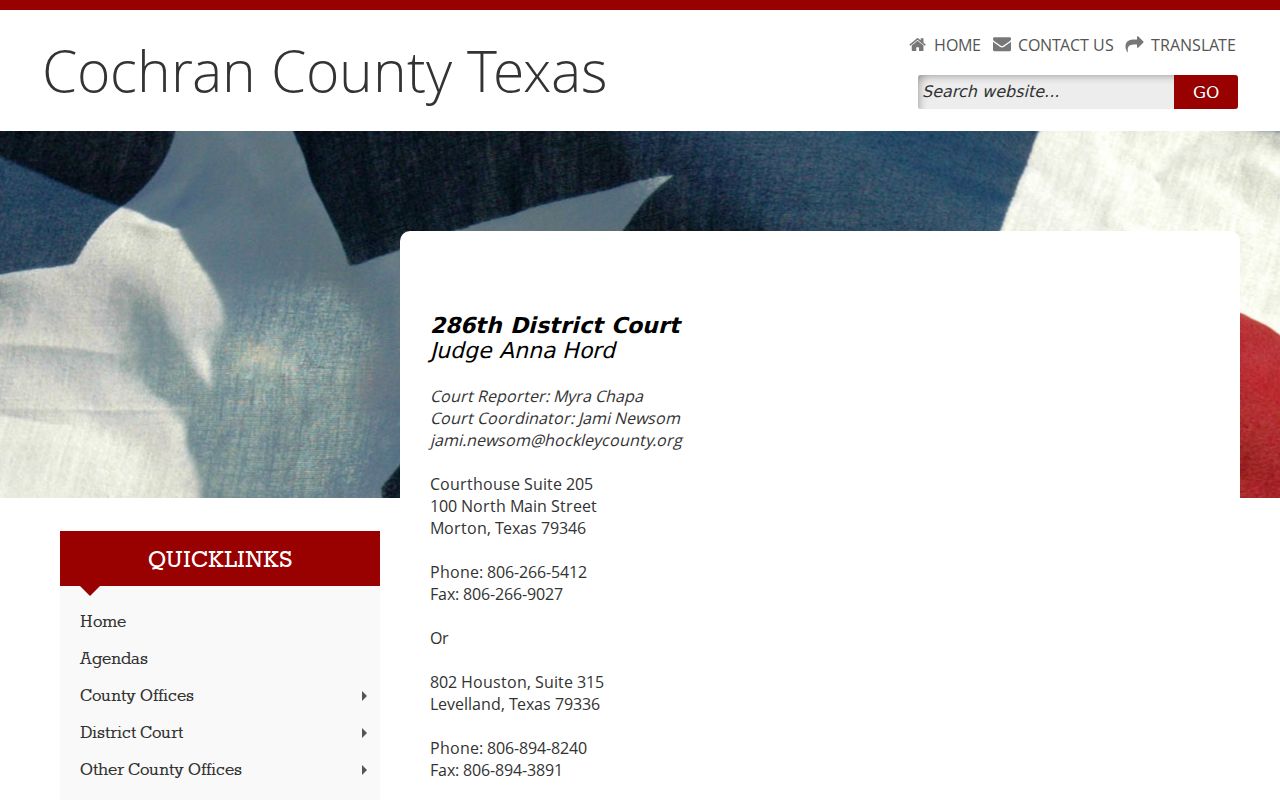
That Cochran County court page offers a contact point, not a public warrant list. It also does not promise that a walk-in appearance can be arranged.
Inside a Cochran County Arrest Warrant
Cochran County publishes no sample warrant entry, so treat these fields as questions to ask, not a local form. The warrant number format and current bond schedule are not posted either. Ask the clerk rather than guessing. A missing field does not make a record invalid.
| Warrant or cause number | Connects the order to the court file; the local format was not published. |
|---|---|
| Issuing authority | Names the judge or magistrate and court that directed the process. |
| Complaint and offense | Describes the sworn charge and any offense classification or statute. |
| Serving agency | May identify the sheriff or other authorized peace officer holding the order. |
| Bond and status | Ask whether bond was set and whether the record is active, served, recalled, or returned. |
Ask the Cochran County clerk whether a warrant copy is public, sealed, or partly redacted. Any status wording comes from the office that holds the actual file.
Cochran County Warrant Service Has Separate Roles
Five courts can issue process in Cochran County: the 286th District Court, the countywide JP, County Court, Morton Municipal Court, and Whiteface Municipal Court, each within its own jurisdiction. The sheriff is the county's law-enforcement contact. Cochran County's official sheriff page names no warrant sergeant, city marshal, or dedicated warrant division. Texas rules may allow other authorized peace officers to serve process. Article 45A.103 covers municipal paper. It lets a municipal peace officer or marshal serve it in the circumstances the article describes. Cochran County does not publish the current service arrangement for Morton or Whiteface. So ask the issuing court directly. That judge's staff can say which agency holds the order and where to request service or surrender information.
Serving Arrest Warrants in Cochran County
The Cochran County Sheriff posts a general phone, an email, and an open-records email. No roster appears there. There is no separate warrant line and no posted surrender hours. For district process, call the 286th District Court, or ask the District Clerk in Room 102 which office holds the case. When an officer executes a warrant, the person goes into custody. Local booking and court procedures follow. Cochran County publishes no timing promise, no bond-window hours, and no payment instructions. Anyone wanting to address an arrest warrant before contact should ask the issuing court, and counsel may arrange a motion, a voluntary appearance, or a bond discussion.
Cochran County Sheriff's Office
Room B-7, 100 North Main Street
Morton, Texas 79346
806-266-5211
Cochran County Arrest Warrants and Juvenile Limits
A juvenile arrest warrant and its supporting complaint or affidavit stay confidential under Texas Family Code Section 58.010. Only recipients the statute lists may see them. Chapter 552 adds another limit. It can let a law-enforcement body withhold information if release would interfere with detection, investigation, or prosecution. So a public request does not guarantee access to a sealed or active investigative file. The juvenile confidentiality provision spells out that separate restriction. The official statute text is the authority on it, not any one person's case in Cochran County.
For a public-record request in Cochran County, describe the existing record. Then ask the clerk or sheriff what may be released under the applicable law.
Comparing Arrest, Summons, and Bench Warrants
All of these records can pull a person back into a Cochran County courtroom. They just start differently. A summons orders an appearance, while a bench warrant usually follows a missed setting or a violated order. An arrest warrant comes out of probable-cause process, and a capias pro fine ties to an unsatisfied justice or municipal judgment.
| Process | What starts it | Local question |
|---|---|---|
| Arrest warrant | Sworn complaint and probable-cause review | Which magistrate and officer hold the order? |
| Summons | Notice to appear in a case | What date and court are listed? |
| Bench warrant | Missed setting or court order | Can the setting be reset or warrant recalled? |
| Capias pro fine | Unsatisfied judgment after statutory steps | Does hardship or voluntary appearance apply? |
Cochran County Arrest Warrant Calls Before Surrender
Get answers before you walk in. Ask which court issued the warrant, which agency holds it, and whether a bond amount is set. Ask whether counsel can arrange a scheduled appearance. The Cochran County sheriff page does not say Room B-7 accepts surrender or bond. No walk-in schedule is published either. Guessing where booking starts helps no one. A lawyer can call the issuing court, request a recall or a new setting, and learn whether a voluntary appearance is available. If the arrest has already happened, ask the court about bond and appointed-counsel eligibility where applicable.
Before you go: Confirm the court, agency, reporting time, and bond instructions with the issuing office or an attorney.
Cochran County Arrest Warrant or Capias
Know which paper you face. An arrest warrant in Cochran County rests on probable cause. A capias pro fine is different; it collects an unpaid justice or municipal court judgment. A DPS-reported FTA or FTP item differs too. Ask the court to name the process before agreeing to any payment or appearance plan, since one number can sit on a case with more than one open issue. The current Chapter 45A statute governs arrest and capias practice in local lower courts. Cochran County's JP, Morton, and Whiteface contacts each control their own cases. The JP office page and the OCA directory are contact leads only; neither proves a warrant is active or cleared.
If There's an Arrest Warrant for You
Start with the case paper. It points to the issuing court. Call that clerk, then the Cochran County sheriff, and ask whether the warrant is active, whether the court allows a motion or walk-through, where bond is handled, and what written proof shows a recall. Helping a relative? Share the office contact instead of posting personal details in a public message.
- Write down the cause or citation number and the issuing court.
- Ask the clerk what process is recorded and whether a date is set.
- Contact counsel about a recall request, voluntary appearance, or bond.
- Follow only the court's confirmed instructions and keep receipts or orders.
- Recheck court and sheriff status after the required action.
The Cochran County warrant overview gives the broader local sequence for resolving a case.
Cochran County Federal Warrants Stay Separate
Federal warrants live in a separate system. One never appears on the Cochran County sheriff's list or in a state court case file. Cochran County sits in the Northern District's Lubbock Division. The Northern District court page maps that division. PACER may show a public federal docket. Sealed complaints and investigative material can stay hidden, so a docket search is not a complete warrant check. For a possible federal matter, talk to a lawyer or contact the federal court or the U.S. Marshals Service directly. Skip the JP and County Clerk land-record search; the official PACER site is where federal dockets actually appear.
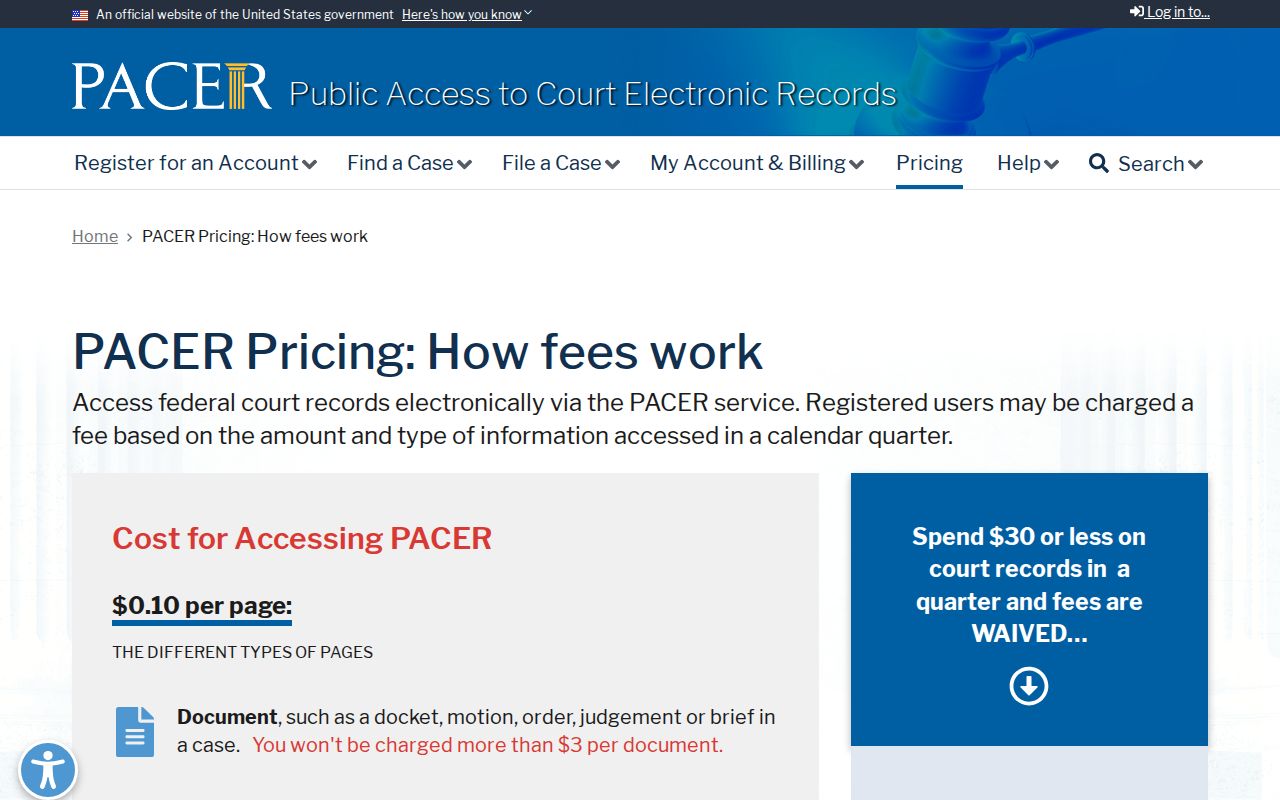
It illustrates a federal docket source, not a county warrant roster.